

Table of Contents
- Introduction
- Reuse Before You Buy
- Reduce Disposable Products
- Plan Shopping and Meals
- Use Reusable Bags for Family Errands
- Teach Children Simple Sustainable Habits
- Conclusion
Introduction
Many families want to make greener choices but worry that sustainable living will cost more. Some eco-friendly products can be expensive, but many green habits actually save money. Reusing items, reducing disposables, planning meals, and avoiding unnecessary purchases can lower waste and household costs at the same time.
A greener family lifestyle does not need to be perfect. It can begin with practical choices that fit everyday routines. The best changes are simple enough for the whole family to understand and repeat.
Reuse Before You Buy
The most affordable sustainable habit is using what you already have. Before buying new storage systems, containers, or eco-products, look around your home for items that can be repurposed.
Examples include:
- Glass jars for pantry storage
- Old boxes for organizing toys
- Cloth towels for cleaning
- Reusable containers for lunches
- Old bags for sorting laundry or supplies
- Worn clothing for cleaning rags
- Shoeboxes for craft materials
This habit helps reduce both waste and spending. It also teaches children that items can have more than one use.
Reduce Disposable Products
Disposable products often seem cheap, but repeated purchases add up. Families can save money by replacing common single-use items with reusable alternatives.
Start with items your family uses most often:
- Paper towels
- Plastic water bottles
- Disposable lunch bags
- Plastic shopping bags
- Single-use cutlery
- Disposable plates or cups
- Individually packaged snacks
You do not need to replace everything at once. Choose one category first. Once that habit feels normal, move to another.
Plan Shopping and Meals
Food waste is expensive. Planning meals and shopping with a list can reduce both waste and unnecessary spending.
Useful habits include:
- Check the fridge before shopping
- Plan meals around ingredients you already have
- Buy realistic quantities
- Store leftovers clearly
- Freeze extra food before it spoils
- Use older pantry items first
- Prepare simple meals that share ingredients
A simple meal plan can make the week easier and reduce last-minute takeout. It also helps families avoid buying too much food that may not be used.
Use Reusable Bags for Family Errands
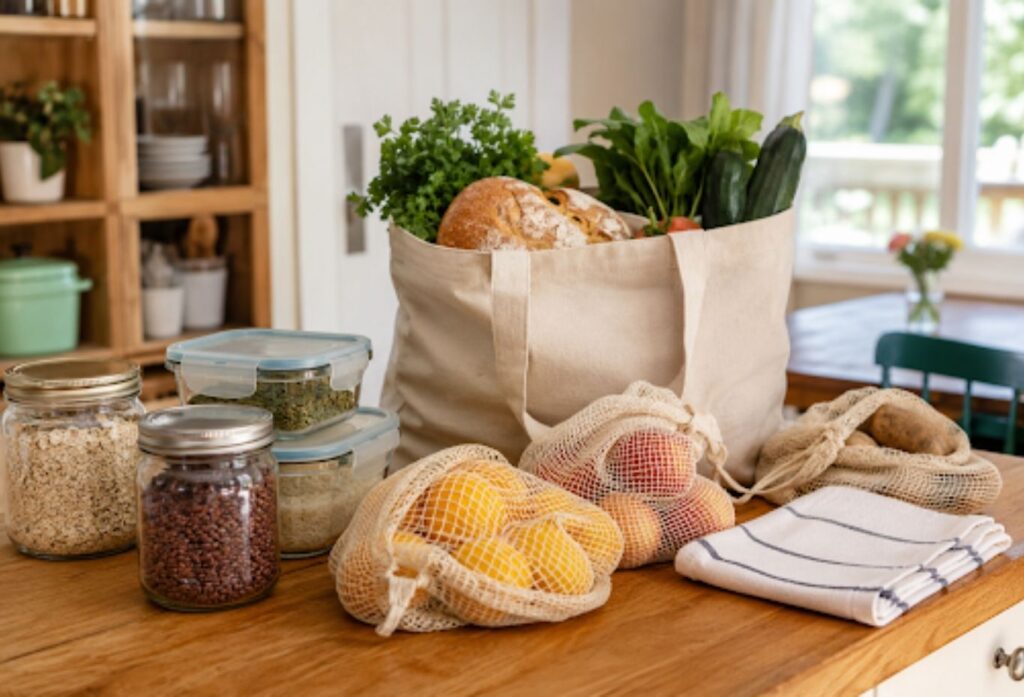
Family errands often involve carrying many items: groceries, library books, school supplies, sports gear, snacks, and returns. Reusable grocery bags can reduce the need for disposable plastic bags while making errands easier.
A sturdy canvas tote bag can also be used for family outings, school events, weekend trips, or daily organization. Because it is flexible and easy to carry, it can serve many purposes beyond shopping.
Keep bags in places your family will remember:
- Near the door
- In the car
- With the stroller
- In a closet basket
- Next to the grocery list
When bags are easy to find, everyone is more likely to use them.
Teach Children Simple Sustainable Habits
Children learn from repeated actions. Simple habits can help them understand sustainability naturally.
Examples include:
- Turning off lights
- Refilling water bottles
- Sorting recycling
- Donating unused toys
- Bringing reusable bags
- Avoiding food waste
- Reusing craft materials
Make the habits positive and easy to understand. Instead of focusing on guilt, show children how small actions help the household and the environment.
Conclusion
Families can make greener choices without spending more by reusing what they own, reducing disposables, planning meals, and building simple habits. Sustainability becomes easier when it saves money, reduces clutter, and fits naturally into family life.