
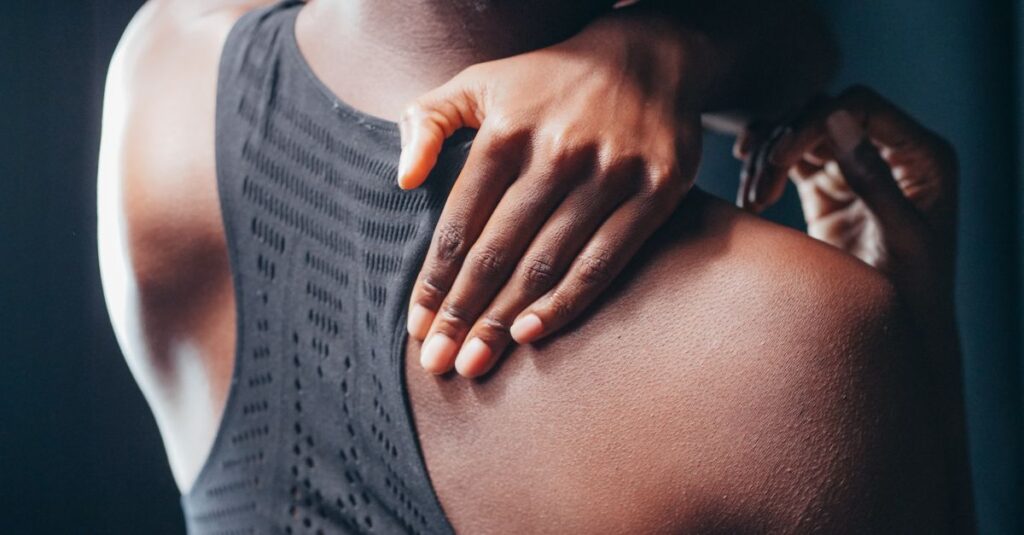

Most rotator cuff tears do not happen in a single moment. They build quietly over months of accumulated stress, poor mechanics, and muscle imbalances that never get addressed until the shoulder finally stops cooperating. South Florida athletes are especially vulnerable because the year-round training calendar here removes the natural recovery windows that cooler climates build in without anyone noticing. Understanding what is actually loading the rotator cuff and knowing how to mitigate the risk of injury before tissue damage becomes structural is one of the most valuable investments a South Florida athlete can make in their long-term performance. South Florida physical therapy programs built around shoulder prevention identify those risks before they become tears, not after.
What the Rotator Cuff Is Actually Being Asked to Do
The rotator cuff is four muscles working as a single system to keep the ball of the upper arm centered in the shoulder socket during every throw, swing, stroke, and press. It is not designed to generate power. It is designed to control the joint while the larger muscles around it do the heavy lifting. When that division of labor breaks down, which it does gradually and silently in most overhead athletes, the rotator cuff starts absorbing force it was never meant to handle. A Fort Lauderdale competitive swimmer logging ten thousand meters a week, a Coral Gables tennis player grinding through back-to-back weekend tournaments, or a recreational golfer playing thirty-six holes in South Florida heat are all asking the rotator cuff to compensate for every upstream weakness in the chain with every repetition they complete.
Why the Breakdown Rarely Starts in the Shoulder
The rotator cuff does not usually fail because of something the shoulder did wrong. It fails because something further down the chain stopped doing its job, and South Florida physical therapy that treats the shoulder in isolation without evaluating that chain will keep producing short-term relief with the same injury waiting on the other side. Weak scapular stabilizers force the shoulder blade to lose its position during arm elevation, which changes the angle at which the rotator cuff tendons pass through the joint and creates impingement with every overhead motion. A stiff thoracic spine shifts the same load onto the shoulder by limiting how much the mid-back can contribute to rotation and extension. Tight posterior capsule tissue, common in throwing athletes and swimmers, pulls the humeral head forward during overhead movement and creates abnormal contact between the tendon and surrounding structures. South Florida physical therapy assessments that evaluate the full chain catch these patterns before they accumulate enough damage to become symptomatic.
What South Florida Specifically Adds to the Problem
Training in South Florida year-round without a defined off-season means the rotator cuff never gets the sustained unloading period that tissue repair requires. Heat and humidity accelerate fatigue, which causes form to break down earlier in a session than most athletes realize. A tired shoulder blade stops moving correctly long before the athlete feels it, and the rotator cuff picks up the difference rep by rep. Dehydration affects connective tissue elasticity in ways that increase vulnerability to microtears under repetitive load. South Florida physical therapy providers factor these environmental variables into prevention programming because ignoring them means the shoulder is being assessed in a clinical vacuum that does not reflect how it actually gets used.
What Prevention Looks Like in Practice
Preventing rotator cuff tears is not about doing less. It is about preparing the shoulder complex to handle what the athlete is already doing without compensating through the wrong structures. South Florida physical therapy prevention programs begin with a movement assessment that evaluates scapular mechanics, rotator cuff strength ratios, posterior capsule mobility, and thoracic spine contribution to overhead motion. From that assessment, targeted programming addresses the specific deficits rather than applying a generic shoulder protocol. External rotator strengthening rebuilds the rotator cuff’s ability to control the joint under load. Scapular stability work restores the shoulder blade positioning that protects the tendon during arm elevation. Thoracic mobility training gives the mid-back back its role in overhead movement so the shoulder stops compensating for its stiffness. Load management education helps athletes and their coaches structure training volume in a way that accounts for South Florida’s heat, the cumulative fatigue of a year-round schedule, and the recovery demands of high-repetition overhead sport, which no South Florida physical therapy prevention program should leave out.
When Subtle Signs Become Urgent Signals
A catching sensation at the top of a golf swing, a slight drop in throwing velocity, shoulder fatigue that arrives earlier in a swim set than it used to, or mild morning achiness after a hard training day are not normal features of a heavy training block. They are the shoulder’s early warning system, and most athletes override them until the window for simple prevention has already closed. This is where South Florida physical therapy makes its biggest impact, not in the rehabilitation of a confirmed tear but in the assessment that catches the warning signs before the tissue gives way. South Florida physical therapy offers baseline shoulder assessments that establish where strength, mobility, and mechanics actually stand before pain becomes the catalyst for care. A short series of South Florida physical therapy prevention sessions at this stage does more for an athlete’s career longevity than months of rehabilitation after a partial or full tear.
A Shoulder Built to Last the Season and Beyond
South Florida’s training culture does not slow down, and the athletes who stay in it longest are not the ones who train hardest. They are the ones who train with enough self-awareness to address what their shoulder is telling them before it stops asking politely. Aries Physical Therapy provides South Florida physical therapy designed to assess the full shoulder system, identify the specific risks unique to each athlete’s sport and mechanics, and build the strength and mobility foundation that keeps the rotator cuff doing its actual job rather than someone else’s.