

Table of Contents
- Story Starters
- Sensory Writing
- Collaborative Storytelling
- Poetry Exploration
- Letter Writing
- Writing with Visuals
- Sentence-Building Games
- Publishing Student Work
Creative writing in fourth grade is about much more than just putting words on paper. It fosters essential skills that students will carry with them for years to come. When children feel inspired and supported, they can develop a love for language while enhancing their imagination, vocabulary, and communication skills. Educators and parents need to introduce activities that keep students motivated and eager to learn. For fresh lesson ideas and inspiration, teachers can explore fourth-grade resources at https://studentreasures.com/teachers-lounge/lesson-plans/fourth-grade/.
Bringing variety to creative writing lessons can help young writers overcome fears of a blank page and discover new ways to express themselves. Fourth graders, in particular, thrive when activities feel interactive, scaffolded, and relevant to their lives. With a bit of encouragement and thoughtfully designed prompts, children are empowered to create written pieces that reflect both their skills and unique perspectives.
The following activities blend enjoyment with critical thinking and creativity. By rotating between them, educators can build an engaging classroom routine that supports every student’s writing journey. These strategies not only nurture literacy skills but also foster collaboration, self-esteem, and lifelong learning.
Story Starters
Getting started can often be the hardest part of writing for young students. Story starters, or writing prompts, provide a scaffold to spark their imagination. Offering a sentence such as “The mysterious package arrived on a rainy afternoon…” creates a structured yet open-ended invitation to begin. These starters break down mental barriers and encourage reluctant writers to dive into the creative process without hesitation. For additional ideas on age-appropriate writing prompts, see these teacher-tested prompts from Scholastic.
Sensory Writing
Descriptive writing becomes vivid when students use all five senses, sight, sound, smell, touch, and taste, to build details. Activities that ask students to recount a recent experience, such as a field trip or nature walk, with a focus on sensory details will help them paint rich, engaging scenes for the reader. Vivid writing fosters empathy and connection, making stories not only more interesting to read but also to write.
Activity Suggestions for Sensory Writing
- Bring objects into the classroom (like fruit or leaves) for observation and description.
- Use word banks of sensory adjectives and verbs to prompt more descriptive sentences.
- Encourage students to close their eyes and describe sounds in the environment before writing about them.
Collaborative Storytelling
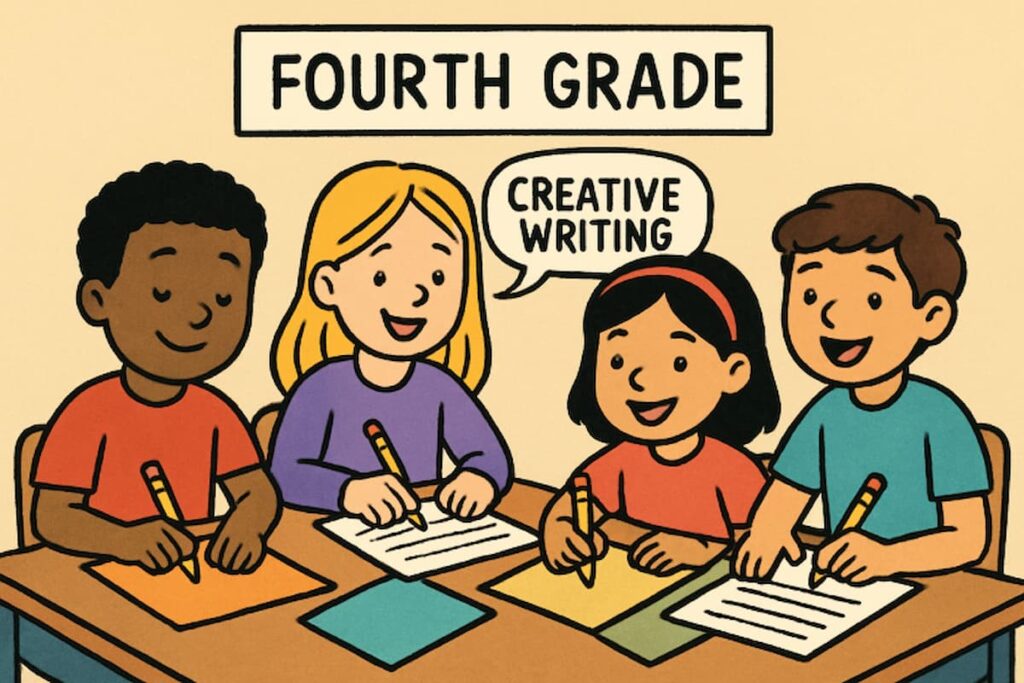
Storytelling as a group introduces students to teamwork, listening, and thinking creatively. Collaborative storytelling works well when students sit in a circle, with each participant adding a sentence or paragraph to a shared narrative. This activity can be done aloud or made into a written “pass the story” exercise, where each student writes a part before passing it to a classmate. This process both mirrors real-world creativity and helps build social confidence. It is also great for building classroom community and strengthening peer relationships.
Poetry Exploration
Exploring poetry allows fourth graders to experiment with the rhythm, sounds, and forms of language in concise and imaginative ways. Introducing various forms, such as haikus, acrostic poems, and rhyming couplets, can provide a structured but creative playground for language. For instance, a simple haiku about a season or animal encourages observation and word economy. Poetry writing also serves as a strong foundation for developing voice and self-expression.
Easy Poetry Prompts
- Write a haiku about your favorite weather.
- Create an acrostic poem using your first name.
- Write a four-line poem about what you see outside your window.
Letter Writing
Combining creative narrative with practical skills, letter writing encourages students to adopt new perspectives. They might compose letters to fictional book characters, historical figures, or even their future selves. This activity hones formal writing skills, reinforces proper format, and teaches empathy by prompting children to consider others’ viewpoints. Letter writing exercises are also helpful for understanding how written communication works in real life, such as with pen pals or thank-you notes. The Reading Rockets Letter-Writing Guide provides additional resources for structuring these classroom activities.
Writing with Visuals
Visual prompts, such as photos, illustrations, or picture books, ignite students’ curiosity and imagination. Asking students to write a story based on a single image improves their observation and detail skills. This method works particularly well for visual learners who benefit from seeing concrete examples as a source of inspiration. Rotate through a variety of images regularly to ensure each student has a fresh chance to be creative.
Sentence-Building Games
Grammar and syntax do not have to be tedious. Games that involve building sentences in playful ways help reinforce important language rules while keeping students engaged. For example, games where students unscramble sentences or add descriptive words make grammar practice enjoyable. Turning grammar lessons into challenges or collaborative efforts supports retention and makes writing more fun.
Publishing Student Work
Displaying students’ creative writing in a published format, such as a classbook, newsletter, or digital gallery, offers recognition and a sense of accomplishment. When students see their work shared publicly, they gain confidence and motivation to continue improving. Publishing also opens the door for feedback from peers and family members, helping children learn to appreciate constructive criticism and celebrate each other’s achievements.
Conclusion
Integrating interactive and imaginative writing activities can transform fourth graders’ classroom writing experience. By using story starters, sensory writing, collaborative storytelling, poetry, visual cues, and games, educators motivate students and build essential literacy skills. Publishing their finished works celebrates their progress and fuels a lifelong love for learning. Carefully selected activities not only nurture strong writers but also foster a creative and inclusive classroom community.