

Table of Contents
- Structural Applications
- Architectural Facades and Cladding
- Interior Design Elements
- Safety Railings and Handrails
- Roofing Systems
- Reinforcement in Concrete Structures
- Sustainability and Recyclability
- Conclusion
Stainless steel is redefining the standards of durability, function, and beauty in today’s built environment. Its adaptability, robustness, and attractive finish have made it indispensable to architects and builders seeking enduring value and contemporary appeal. With its unique combination of mechanical properties and stunning appearance, stainless steel opens a world of design possibilities. Thanks to its corrosion resistance, high strength-to-weight ratio, and ease of fabrication, stainless steel is now found at the heart of commercial, public, and residential projects of all sizes. As the construction industry increasingly looks for effective ways to meet stricter environmental and performance standards, stainless steel stands out not only for its technical advantages but also for the sustainability it offers. Suppliers, such as Specialty Steel Corporation, offer a wide range of stainless steel grades and products tailored to diverse construction needs, further strengthening the material’s reputation as a go-to choice for innovative contemporary architecture.
Modern construction requires reliability, innovation, aesthetic appeal, and sustainability. Stainless steel is a top choice for structural frameworks and architectural details. Its manufacturing flexibility and long-lasting finish make it ideal for both visible designs and essential supports. With increasing emphasis on green building standards like LEED certification, its impressive lifecycle performance and recyclability enhance its sustainability. Whether used in futuristic towers, public infrastructure, or residential spaces, stainless steel provides both immediate and long-term value, pushing the boundaries of modern construction.
Structural Applications
Stainless steel’s strength and light weight make it crucial for load-bearing structures in harsh environments. From bridges to urban buildings, it provides long-term reliability. Its resistance to deformation allows for elegant, slender designs without sacrificing performance. A prime example is the BP Pedestrian Bridge in Chicago, which withstands challenging winters and corrosive elements. Whether in skyscrapers or tunnels, stainless steel’s adaptability ensures safety and longevity, making it a preferred choice for engineers and builders seeking to address technical challenges while enhancing aesthetic appeal.
Architectural Facades and Cladding
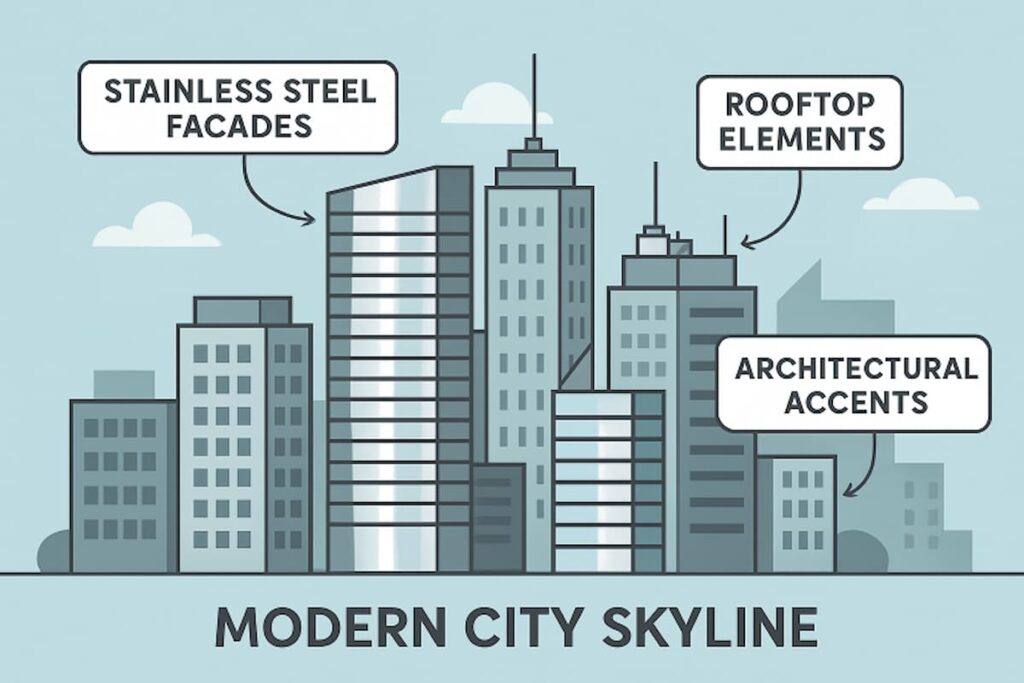
The design flexibility of stainless steel allows it to play a starring role in modern building exteriors. Its corrosion resistance ensures facades remain bright and functional even in polluted urban environments or salt-laden coastal areas. Architects favor stainless steel panels for cladding not only for their impressive durability, but also for their remarkable ability to remain presentable across decades of exposure and their capacity to be crafted into unique shapes, daring geometric forms, and bold finishes. Advances in metalworking techniques have enabled patterned, textured, and colored stainless steel surfaces, giving architects greater expressive freedom than ever before. These qualities make stainless steel cladding an inspired choice for distinctive, high-impact exteriors that set structures apart and maintain their allure well into the future. From iconic museums to innovative office towers, stainless steel transforms the modern cityscape.
Interior Design Elements
Indoors, stainless steel enhances elements such as staircases, kitchen counters, and furniture. It is especially important in environments where aesthetics and hygiene are critical, such as hospitals, hotels, and upscale residences. The reflective surfaces of stainless steel amplify natural light, reducing the need for artificial lighting and creating a modern atmosphere. Its non-porous nature resists bacteria, making it easy to disinfect and ideal for commercial kitchens and medical facilities. Additionally, its durability ensures that interiors maintain a pristine appearance. Due to the demand for sleek designs, stainless steel is frequently selected for accent walls and sculptural features.
Safety Railings and Handrails
High-traffic locations like airports, rail stations, shopping centers, and healthcare facilities rely on stainless steel for handrails and guardrails. The material’s compressive and tensile strength offer dependable safety, while its finish easily blends with a wide variety of interior and exterior styles. These railings offer a sleek, modern aesthetic and serve their function without drawing unnecessary attention, making them popular for both utilitarian and decorative applications. Moreover, the hygienic properties, easy to clean and naturally germ-resistant, make stainless steel the perfect choice for areas with high human contact. Low maintenance needs and lasting shine make these installations both practical and attractive, allowing property managers to reduce long-term upkeep costs while enhancing the user experience.
Roofing Systems
Roofing systems benefit greatly from stainless steel, especially in areas with extreme weather, frequent storms, or heavy snow loads. Its non-porous surface resists water infiltration, and it can tolerate high winds, snow, and intense sunlight for decades without warping, fading, or corroding. These properties significantly reduce maintenance costs and extend the roof’s lifespan, making stainless steel an ideal long-term investment for residential and commercial properties alike. In addition to its weather-resistant properties, stainless steel also enables exciting design possibilities, from sweeping curves to sharp lines, supporting visionary architecture while staying tough against the elements. Building owners who seek both function and form choose stainless steel to realize bold, low-maintenance roofs that will perform for generations.
Reinforcement in Concrete Structures
In bridges and infrastructure exposed to marine conditions or road salts, stainless steel rebar is increasingly being used to reinforce concrete. Unlike standard steel, which can rust and deteriorate rapidly when exposed to moisture and de-icing chemicals, stainless steel resists rust and calcium chloride attack, allowing concrete structures to retain their strength and integrity for longer periods. Incorporating stainless steel reinforcement significantly prolongs the service life of high-value assets such as tunnels, bridges, parking garages, and waterfront installations. This approach not only improves overall safety but also reduces maintenance and repair costs, minimizing disruptions and supporting more sustainable, cost-effective infrastructure spending. The upfront investment in stainless steel rebar pays off over decades, safeguarding public assets and transportation systems.
Sustainability and Recyclability
Stainless steel is a leader in green construction, aligning with the growing demand for sustainable building practices and reduced environmental impact. Not only is it fully recyclable, but products such as structural beams and panels typically contain significant amounts of reused material, sometimes exceeding 60% recycled content. The durability of stainless steel means products often last several decades, drastically decreasing the need for replacement and ultimately reducing landfill waste. This longevity, coupled with the ability to repurpose stainless steel at the end of a building’s life, makes it one of the most environmentally responsible choices for a construction project. These factors support stricter sustainability standards and help buildings obtain green certifications such as LEED and BREEAM, contributing to healthier urban environments and corporate social responsibility goals.
Conclusion
Stainless steel’s unique combination of beauty, strength, and eco-friendliness has positioned it as a key material in the next chapter of modern construction. Its adaptability and high performance across so many roles, from robust structural supports to striking architectural details and sustainable infrastructure solutions, ensure that stainless steel will remain indispensable as architecture and construction continue to evolve. By delivering enduring value, meeting stringent sustainability targets, and supporting creative visions, stainless steel secures its place as a true cornerstone of contemporary building and design excellence.