

Key Takeaways
- Failure to yield, red-light running, distracted driving, and unsafe turns are frequent causes of intersection crashes.
- Photos, witness information, traffic-camera footage, and the police report can be important evidence.
- Do not assume fault based only on vehicle damage or another driver’s statement.
- Medical symptoms can emerge after the initial shock of a collision.
- Nevada’s comparative negligence rules can affect recovery when multiple parties share responsibility.
- Prompt reporting, organized records, and careful communication with insurance can protect a claim.
Table of Contents
- Introduction
- Why Las Vegas Intersections Are Dangerous
- Common Causes of Intersection Accidents
- Evidence That May Establish Fault
- Legal Rights After a Nevada Intersection Crash
- What to Do After the Collision
- Insurance and Settlement Considerations
- Complex Intersection Accident Claims
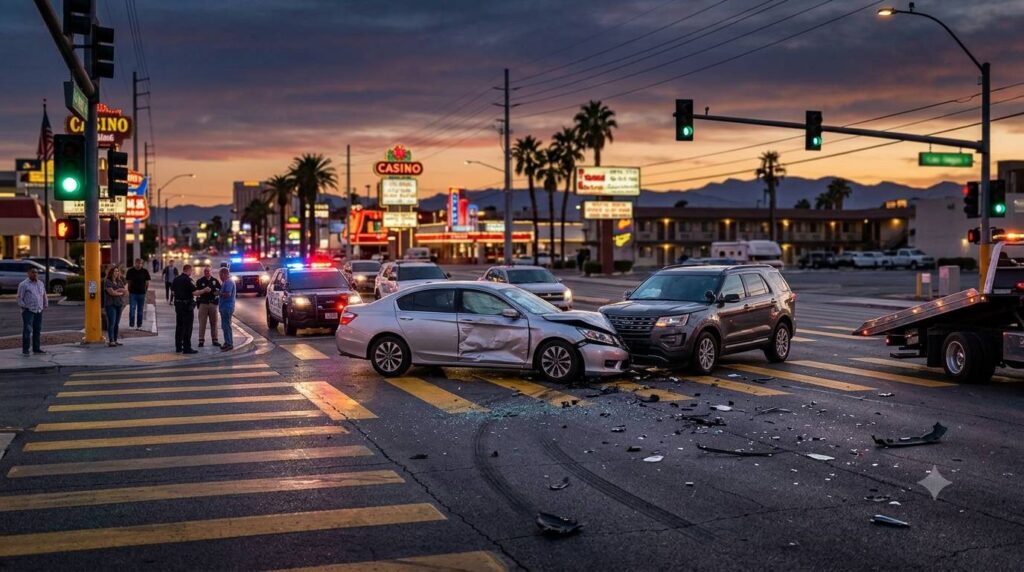
Intersection crashes can leave Las Vegas drivers, passengers, pedestrians, and cyclists dealing with painful injuries, damaged vehicles, and conflicting accounts of what happened. Understanding the likely cause of the collision can help preserve important evidence and clarify the next steps. Those facing injuries or a disputed insurance claim can learn about car accident claims at stevedimopoulos.com/car-accidents/ before making decisions about a settlement or recorded statement.
Busy tourist traffic, wide multi-lane roads, turning vehicles, short light cycles, and distracted drivers can make intersections especially dangerous. Although many collisions appear straightforward at first, liability may involve traffic signals, right-of-way rules, witness accounts, video footage, vehicle data, and the actions of more than one person.
Why Las Vegas Intersections Are Dangerous
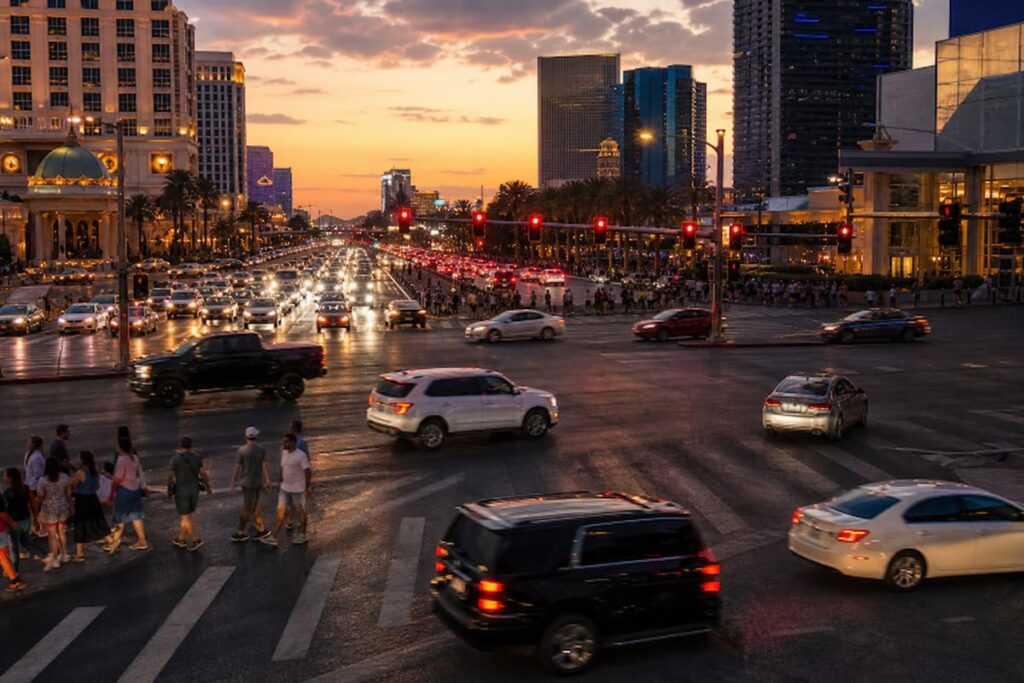
Intersections require drivers to process several hazards at once. A motorist may need to watch a changing signal, check cross traffic, yield to pedestrians, judge the speed of approaching vehicles, and navigate unfamiliar lanes. On major Las Vegas streets, congestion and aggressive driving can add pressure to make a turn or enter the intersection before it is safe.
Nighttime conditions can create further risk. Bright signs, glare, limited visibility, impaired driving, and heavy weekend traffic may make it harder to see lane markings, pedestrians, motorcycles, or vehicles entering late at a yellow or red light. Road construction and temporary lane changes can also cause confusion about who has the right of way.
Common Causes of Intersection Accidents
Failure to Yield
A driver turning left generally must wait for oncoming traffic unless there is a protected green arrow or another clear basis to proceed. Drivers also must yield when entering from a side street, leaving a driveway, or encountering pedestrians in a crosswalk. A misjudged gap can result in a serious broadside collision.
Red-Light and Stop-Sign Violations
Running a red light or rolling through a stop sign can cause severe crashes because cross traffic may be moving at full speed. The key question is often not simply who entered the intersection first, but which driver had the legal right to proceed at that moment.
Distracted, Impaired, or Speeding Drivers
Looking at a phone, programming navigation, eating, or talking to passengers can delay reaction time. Speeding can be equally significant because it reduces the time available to stop and may make another driver’s judgment about distance and timing inaccurate. Alcohol or drug impairment may further affect perception, attention, and decision-making.
Unsafe Turns and Lane Changes
Right turns made without checking a crosswalk can endanger pedestrians and cyclists. Wide intersections may also invite drivers to drift into another lane during a turn, especially when they are unfamiliar with the roadway. These facts can matter when a crash involves a sideswipe, a motorcycle, a bicycle, or a pedestrian.
Evidence That May Establish Fault
Evidence can disappear quickly, so safety and medical needs should come first, followed by practical documentation. If it is safe to do so, take photos of vehicle positions, damage, skid marks, debris, traffic signals, lane arrows, signs, weather, and sight obstructions. Record the intersection, time, and direction each vehicle was traveling.
Ask witnesses for names and contact information, and note whether nearby businesses, residences, buses, or traffic systems may have cameras. The official crash report can be useful, but it is not always the final word on fault. Statements, video, physical evidence, and medical records may provide additional context.
When law enforcement does not investigate a qualifying crash at the scene, Nevada drivers may have reporting obligations. The Nevada DMV’s crash-report instructions state that an SR-1 report is required within 10 days for an uninvestigated crash involving injury, death, or more than $750 in damage.
Legal Rights After a Nevada Intersection Crash
An injured person may seek compensation from the responsible party for losses connected to the crash, which can include medical expenses, lost income, vehicle damage, pain and suffering, and other legally recoverable harm. The available recovery depends on the evidence, insurance coverage, the severity of injuries, and the specific facts of the case.
Nevada follows a comparative negligence framework. In general, an injured person may still recover damages when their share of negligence is not greater than the negligence of the party or parties being sued, although any recovery may be reduced by their percentage of fault. The current language of Nevada’s comparative negligence law shows why careful investigation matters when each driver claims the other entered improperly.
For many personal injury claims arising from negligence, Nevada law generally provides a two-year filing period. Deadlines can differ depending on the claim, the parties involved, and other circumstances, so it is wise to seek individualized legal guidance well before a deadline approaches.
What to Do After the Collision
- Move to a safe location when possible, turn on hazard lights, and call 911 if anyone may be injured or the roadway is unsafe.
- Exchange identification, insurance, vehicle, and contact information without arguing about fault.
- Seek prompt medical evaluation, even if symptoms seem minor or delayed.
- Preserve photos, repair estimates, medical bills, receipts, missed-work records, and communications with insurers.
- Write a factual account while your memory is fresh, including the signal color, lane position, speed estimate, and witnesses.
Insurance and Settlement Considerations
Notify your insurer promptly and provide accurate facts. Avoid guessing about speed, distance, signal timing, or injuries you have not yet had evaluated. A quick offer may not account for follow-up treatment, lost wages, future care, or the full extent of vehicle damage.
Before signing a release or accepting a settlement, review what rights you may be giving up. Once a claim is resolved, it can be difficult or impossible to pursue additional compensation for later-discovered losses from the same collision.
Complex Intersection Accident Claims
Some crashes involve issues beyond the two drivers. A collision may include a rideshare vehicle, delivery truck, commercial employer, uninsured motorist, defective traffic signal, poorly designed intersection, or multiple vehicles. Pedestrian and cyclist cases may also require close attention to crosswalk markings, visibility, turning movements, and right-of-way rules.
Intersection accidents are often preventable, but proving responsibility can be complicated. Acting promptly, obtaining appropriate medical care, preserving evidence, and understanding Nevada’s legal framework can help injured people make informed choices after a Las Vegas crash.