
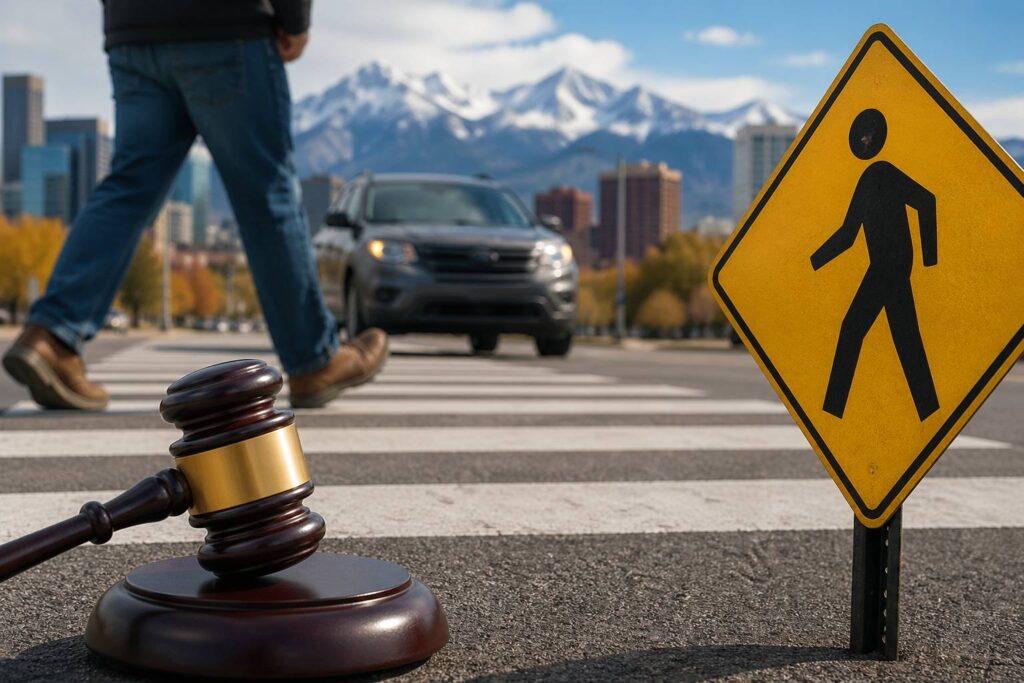

Colorado pedestrian crashes occur most frequently in the urban Front Range environment where pedestrian traffic density and vehicle speeds create the conditions for serious injuries. Denver, Colorado Springs, Boulder, Fort Collins, and the communities along the I-25 corridor generate pedestrian crash concentrations at specific intersection types and road configurations that experienced Colorado pedestrian accident attorneys recognize from patterns in the state’s crash data. When a crash occurs in these environments, the driver who struck the pedestrian is the primary defendant, but often not the only one. The government entity that designed or maintained the crossing, whose signal timing, crosswalk markings, median configuration, or sightline management contributed to the crash, may bear independent liability alongside the driver, and pursuing only the driver when infrastructure failure was a contributing cause leaves a potentially significant defendant unexamined.
A Colorado pedestrian accident lawyer who evaluates the full liability picture from the first day of representation, including both the driver’s conduct and the infrastructure’s role in creating the conditions for the crash, is approaching these cases with the complete framework rather than the most obvious part of it.
Colorado Driver Duties to Pedestrians
C.R.S. Section 42-4-802 requires drivers to yield the right of way to pedestrians lawfully crossing in a marked or unmarked crosswalk at an intersection. C.R.S. Section 42-4-804 requires drivers to exercise due care to avoid colliding with any pedestrian on a roadway and to sound the horn when necessary. Violations of these statutory duties, when they cause pedestrian injury, establish the breach element of negligence directly. Colorado’s 50 percent comparative fault bar applies, and insurers defending pedestrian accident claims in Colorado routinely argue that the pedestrian was crossing against a signal, crossing outside a marked crosswalk, or distracted. These arguments reduce the recovery in proportion to the attributed fault percentage, but no percentage eliminates the claim as long as the pedestrian’s fault stays below 50 percent.
The 182-Day Government Notice Deadline
When a Colorado pedestrian crash was caused or contributed to by a defective government-maintained crossing, inadequate signal timing, or absent or faded crosswalk markings, the governmental entity responsible for the road may bear liability. Claims against Colorado governmental entities require written notice within 182 days of the accident under the Colorado Governmental Immunity Act. This notice is a condition of filing suit, and missing it permanently bars the government entity claim regardless of how strong the infrastructure failure evidence is. For pedestrians injured at inadequately maintained intersections or on poorly designed crossing configurations, identifying the responsible entity and serving the required notice within the 182-day window is as urgent as any step in the legal process.
The Surveillance Evidence That Colorado Pedestrian Cases Depend On
Colorado’s urban pedestrian crash environments are covered by camera systems from multiple sources simultaneously. CDOT cameras on the state highway network, municipal traffic signal cameras, commercial building surveillance, and transit system cameras all cover different portions of the Front Range urban grid. Each system overwrites on its own schedule, and the window to serve preservation demands on each operator before that footage is gone is measured in hours from the moment of the crash. A pedestrian who is hospitalized after a serious crash and whose family does not have legal counsel in place within the first day has likely lost access to the most important objective visual evidence before anyone thought to look for it.
What Serious Colorado Pedestrian Crashes Produce in Terms of Injuries and Damages
Pedestrian crashes with motor vehicles at Colorado urban and suburban speeds produce traumatic brain injuries, pelvic fractures, lower extremity fractures requiring surgical repair, and in fatal cases the wrongful death damages available to surviving family members. Colorado’s non-economic damages cap applies to pedestrian accident personal injury claims. The economic damages component, covering future medical costs and lost earning capacity, is not subject to the cap and in serious cases involving permanent disability represents the largest financial component of the total damages picture. The Colorado Department of Transportation’s pedestrian safety program data documents crash concentrations and contributing factors for pedestrian accidents across the state’s road network, including the specific intersection types and infrastructure conditions that produce the most serious outcomes for people on foot in Colorado.


