
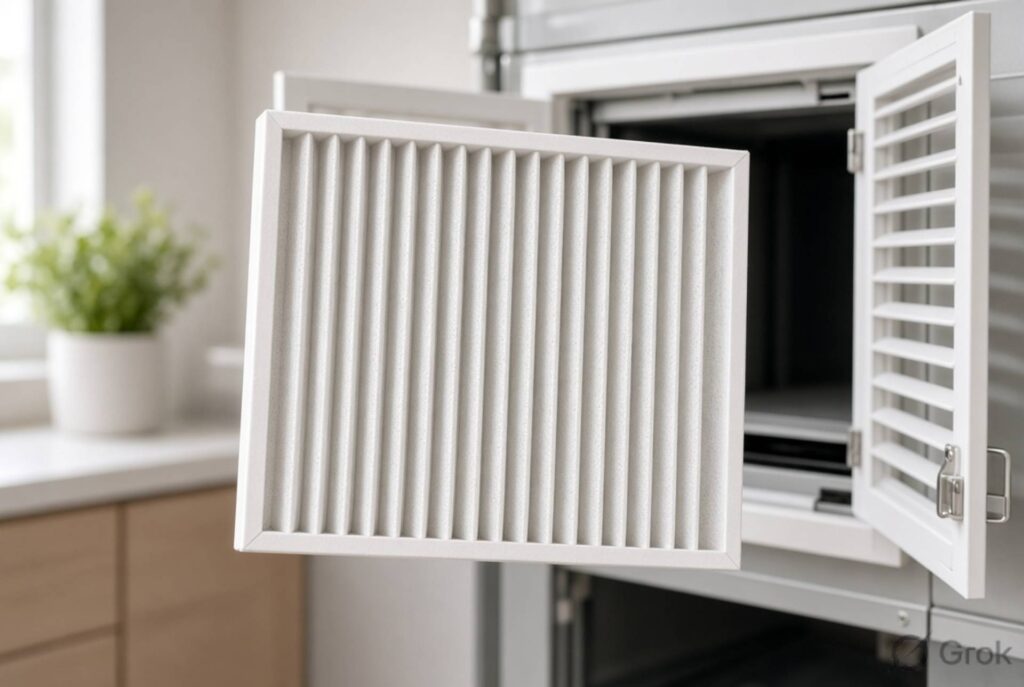

Air filters are one of the simplest parts of an HVAC system, yet they have a direct effect on comfort, efficiency, and equipment life. A clean filter lets air move freely while trapping dust and particles. A neglected one restricts airflow and forces the system to work harder than it should.
Understanding how to choose the right filter, when to change it, and how to keep up with basic care prevents many common performance problems. The process is straightforward once you know what to look for.
What an HVAC Filter Actually Does
The filter sits in the return air path and catches dust, pollen, pet hair, and other particles before they reach the blower and indoor coil. This protects internal components and helps keep the air circulating through your home cleaner.
When the filter loads up with debris, air struggles to pass through. The system then runs longer to reach the set temperature, energy use rises, and wear increases. In some cases, restricted airflow can lead to frozen coils in cooling mode or overheating in heating mode.
Finding the Correct Filter Size
Filters are sized by length, width, and thickness, usually printed on the frame of the existing filter. Common thicknesses are 1 inch, 2 inches, and 4 inches, though some systems use other depths.
Measure the old filter or check the slot in the return grille or air handler if the numbers have faded. Using a filter that is even slightly too small allows unfiltered air to bypass it. One that is too large simply will not fit. Always match the exact dimensions recommended for your equipment.
Understanding Filter Ratings Without Overcomplicating Things
Filters carry ratings that indicate how effectively they capture particles. Higher ratings trap smaller particles but also create more resistance to airflow.
A very high-rated filter is not automatically better for every system. Some older or more compact units are not designed to push air through dense media. Installing a filter that is too restrictive can reduce airflow, lower efficiency, and place extra strain on the blower.
Check your system manual or ask a technician what range suits your equipment. Many homes perform well with mid-range filters that balance particle capture and airflow. Homes with specific allergy needs may benefit from higher ratings, but only when the system can handle them.
How Often to Change the Filter
There is no single schedule that fits every household. Several factors influence replacement frequency:
- Pets that shed
- Local dust or pollen levels
- Recent renovations or construction nearby
- Number of occupants
- How many hours the system runs each day
- Presence of allergies or respiratory sensitivities
A basic one-inch filter in a typical home often needs changing every 30 to 90 days. Thicker media filters can last longer, sometimes up to six months, but still require regular checks. The most reliable method is to inspect the filter monthly and replace it when it looks visibly dirty or when airflow feels reduced.
How to Change the Filter Correctly
Turn the system off at the thermostat before removing the old filter. Slide it out carefully, noting the airflow direction arrow printed on the frame. The arrow should point toward the blower or in the direction of airflow.
Insert the new filter with the arrow facing the correct way. Make sure it sits snugly in the slot with no gaps around the edges. Turn the system back on and listen for normal operation.
Dispose of the old filter properly. Some people prefer to vacuum the area around the slot before inserting the new one to remove loose dust.
Consequences of Neglecting Filter Changes
A clogged filter creates a chain of problems. Restricted airflow reduces comfort, raises energy bills, and can cause the system to short-cycle or shut down on safety limits. Dust that bypasses a full filter settles on the indoor coil, lowering heat transfer efficiency and potentially leading to moisture issues.
Over time, the extra strain shortens the life of motors and other components. Regular filter changes are one of the lowest-cost ways to avoid these outcomes.
Practical Tips for Ongoing Care
- Write the installation date on the filter frame with a marker
- Set a recurring calendar reminder based on your household’s needs
- Keep a spare filter on hand so replacement is never delayed
- Follow the equipment manufacturer’s guidance before switching to a much higher-rated filter
- Consider a professional inspection if you notice persistent airflow problems even with clean filters
These small habits keep the task manageable and protect system performance.
Frequently Asked Questions
Can I wash and reuse my HVAC filter?
Most disposable fibreglass and pleated filters are not designed for washing. Some permanent electrostatic filters can be cleaned according to the manufacturer’s instructions, but they still need regular attention and eventual replacement when the media wears out.
Is a higher MERV rating always better?
Not necessarily. Higher ratings capture smaller particles but increase airflow resistance. Use a rating that matches your system’s design and your household’s air-quality needs. When in doubt, stay within the range recommended in the equipment manual.
What if my filter gets dirty much faster than expected
Increased dust, new pets, nearby construction, or a system that runs many hours each day can all shorten filter life. Inspect more frequently and address any unusual sources of debris if possible.
Should I change the filter myself or call a technician?
Filter replacement is a routine homeowner task for most systems. Call a professional if the filter slot is difficult to access, if you notice damage around the filter area, or if airflow problems continue after installing a clean filter of the correct size.
Conclusion
Choosing, changing, and maintaining the right HVAC air filter is one of the easiest ways to support system efficiency and indoor comfort. Match the size exactly, select a filtration level the equipment can handle, and replace the filter before it becomes heavily loaded. Households with pets, allergies, or higher dust levels will need to check more often. Consistent attention to this simple component reduces strain on the system, helps maintain steady airflow, and prevents many common performance issues. A few minutes every month or two keeps the rest of the HVAC system working as it should.