
Better powder coating results often come from improving the entire finishing process rather than replacing one machine at a time. Growing production demands can expose weak points in airflow, curing capacity, part handling, and booth layout that were manageable at lower volumes. A planned equipment upgrade helps a shop increase output while keeping coating quality, operator workflow, and future expansion in mind.
Start by Measuring Where Production Actually Slows Down
Before purchasing equipment, shop managers should identify which part of the coating line limits daily production. Tracking loading time, spray cycles, color changes, oven dwell time, rejected parts, and cooling delays can reveal whether the real bottleneck sits inside the powder coating booth, curing area, or material-handling process.
Production records also show whether existing equipment can support larger parts or additional shifts. Comparing current throughput with expected demand gives a shop a practical baseline for determining whether it needs more booth space, faster curing, improved controls, or a completely redesigned finishing line.
Does the Existing Powder Booth Still Fit the Work?
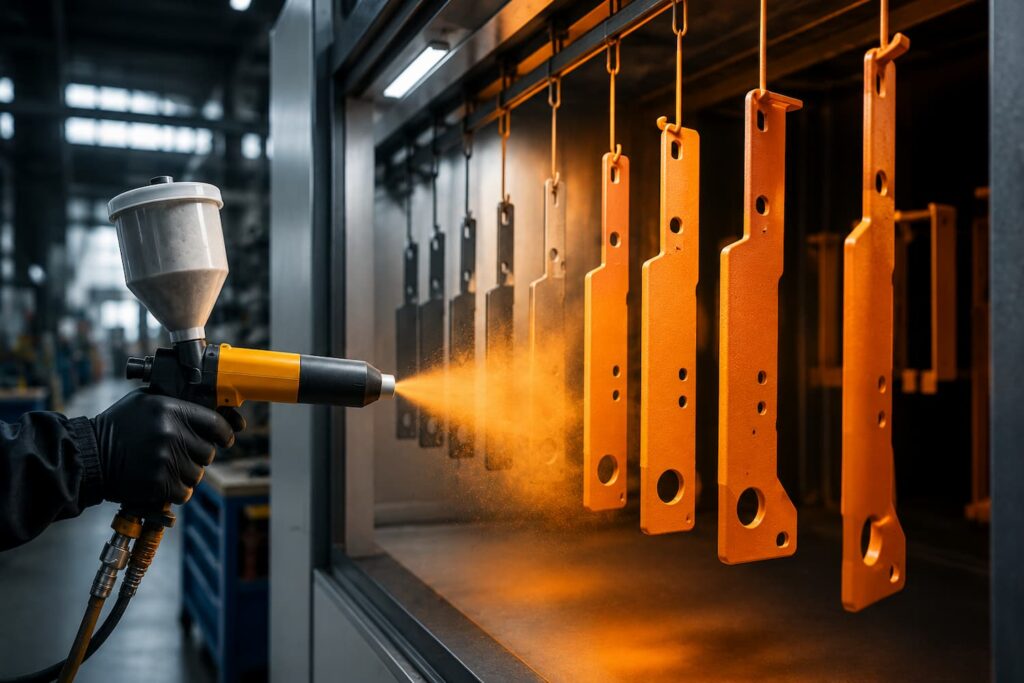
Next, the shop should evaluate whether its booth provides enough working room and airflow for the parts being coated. Oversized components positioned too close to filters or booth walls can interfere with spray access, while inadequate air movement may allow suspended powder to collect where operators do not want it.
Proper booth sizing should account for part dimensions, gun movement, conveyor clearance, filtration, and planned production growth. Shops reviewing Reliant powder coating equipment for sale can compare booth configurations alongside the rest of the finishing system instead of treating the booth as an isolated purchase.
Match Oven Capacity to the Parts Moving Through the Line
Curing equipment needs enough interior space and heating capacity to bring both the coating and metal substrate to the required temperature. Simply setting a timer does not guarantee full cure because thick steel components can take considerably longer to reach temperature than thin sheet-metal parts.
Larger operations may consider Reliant powder coating ovens or a Reliant industrial powder coating oven when existing curing capacity limits throughput. Correct sizing also matters because an oversized oven may consume unnecessary floor space, while an undersized unit can create a backlog between coating and unloading.
Build the Equipment Layout Around Part Movement
Another upgrade step involves studying how parts travel from preparation through coating, curing, cooling, and final inspection. Long carrying distances, tight turns, poorly positioned doors, and repeated handling can slow production while increasing the chance of touching or damaging freshly coated surfaces.
Efficient layouts reduce unnecessary movement and give operators enough room to load racks, spray difficult angles, and transfer work safely. A Reliant powder coating equipment package can be evaluated as a connected setup so booth placement, oven access, carts, racks, and work areas support the same production path.
Plan for Faster Color Changes Without Creating Contamination
Color variety can affect productivity as much as overall part volume. Frequent changes require operators to clean guns, hoses, booth surfaces, recovery components, and surrounding areas carefully, since leftover powder can appear as visible specks in the next finish.
Dedicated procedures become especially useful when a shop handles light colors, textured finishes, metallic powders, or short custom runs. Modern Reliant powder coating systems can support a more organized workflow, but good housekeeping and thoughtful scheduling still play major roles in controlling cross-contamination between batches.
How Much Curing Capacity Will Future Production Need?
Future workload deserves attention before new equipment reaches the floor. Shops expecting larger orders should estimate how many racks, parts, or conveyor loads must pass through the curing stage each hour instead of sizing equipment around today’s average production.
Expansion planning may lead a facility to compare a Reliant powder coating oven for sale with larger Reliant powder curing ovens designed for higher production requirements. Looking several years ahead can prevent another equipment replacement soon after the first upgrade and make future line expansion easier to accommodate.
Connect the Upgrade Into One Complete Finishing Process
Finally, the strongest upgrade plans treat preparation, application, curing, ventilation, controls, and material handling as parts of one system. Equipment that works well individually can still create delays if booth output exceeds oven capacity or if operators cannot move coated parts efficiently between stages.
Reliant Finishing Systems supplies Reliant powder coating equipment for shops planning new finishing lines or expanding existing capabilities. Facilities can review booth, oven, and complete system options with the company to determine how equipment specifications, available floor space, part dimensions, and production goals can work together in a practical powder coating setup.