
The better alternative to Braces
If you’ve been putting off straightening your teeth because the thought of metal braces is off-putting, you’re not alone. For many adults and teens in Bondi and the Eastern Suburbs, traditional braces have always felt disruptive to daily life.
What if you could get a straighter smile without any of that? Invisalign clear aligners offer orthodontic treatment in a less visible and less disruptive way than braces. We explore why they’re an alternative to braces and where an Invisalign dentist can offer an improved teeth-straightening experience.
Invisalign offers non-disruptive teeth straightening
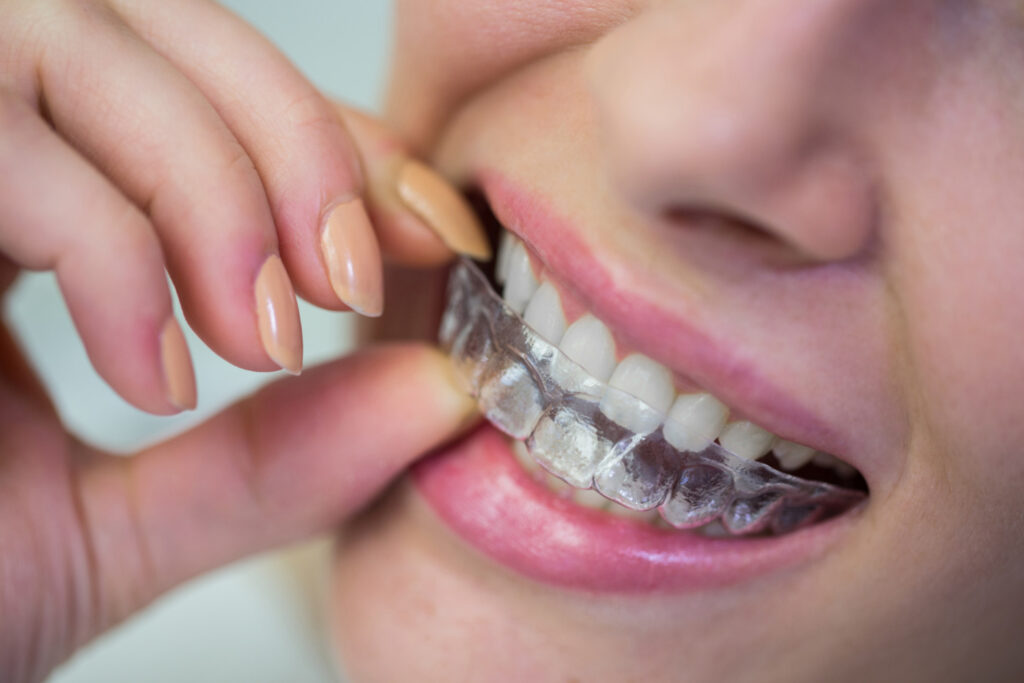
Invisalign aligners are made from SmartTrack, a patented, clear medical-grade thermoplastic that matches the exact contours of your teeth. They’re designed to be nearly invisible at normal conversation distances, which means most people around you simply won’t notice them.
That matters more than it might sound. One survey found that 82% of adults say the first thing they notice about a person is their smile. Yet many people hold off on orthodontic treatment because they don’t want to spend a year or more in visible metal braces. Invisalign removes that barrier entirely.
Invisalign is removable
Invisalign’s removability sets it apart from traditional braces. You can take the aligners out to eat, drink anything other than water, brush, and floss. There are no food restrictions and no wrestling with floss threaders. With traditional braces, hard and sticky foods must be avoided.
The same goes for cleaning your teeth. One of the less-talked-about downsides of braces is that they make proper brushing and flossing difficult. Plaque can build up around the brackets, and gum health can suffer. With Invisalign, you brush and floss exactly as you normally would, because there’s nothing in the way.
Using Invisalign means fewer trips to the dentist
Braces typically require monthly adjustment appointments, during which the orthodontist tightens the wires. These visits take time and, for many patients, cause soreness afterwards.
Invisalign works differently. You move through a series of custom-made aligners — usually changing to the next set every one to two weeks — and check-in appointments are typically less frequent. Many patients visit their dentist every six to eight weeks rather than monthly. For busy Bondi locals juggling work, family, and everything in between, that’s a meaningful difference.
Invisalign is more comfortable day-to-day
Brackets and wires create constant friction against the inside of your cheeks and lips. New patients to braces often spend the first weeks applying wax to blunt sharp edges and dealing with ulcers and irritation.
Invisalign aligners are custom-fitted to your teeth and don’t have any protruding parts. There’s an adjustment period when you start, but most patients describe it as mild pressure rather than discomfort. The experience is meaningfully different from the ongoing friction that comes with fixed metal appliances.
Invisalign offers predictable results
Before you start Invisalign treatment, your dentist will use 3D imaging technology to map out the full movement of your teeth from where they are now to where they’ll be at the end of treatment. You can actually see a simulation of your end result before you commit.
That’s something braces can’t offer in the same way. With Invisalign, the treatment plan is precise, and the timeline is transparent. You know what to expect, and each new aligner is a measurable step toward your goal.
Is Invisalign right for you?
Invisalign works well for a wide range of cases, though the right fit depends on your specific situation. Here are some of the cases Invisalign can treat:
- Crowding: When teeth overlap or are pushed out of position due to limited space in the jaw. Invisalign gradually shifts your teeth into their correct positions, creating a more even smile.
- Spacing and gaps: Unwanted spaces between teeth, often caused by missing teeth or a jaw that’s larger than the teeth require. Invisalign closes these gaps, improving both appearance and bite function.
- Overbites: When the upper front teeth extend too far over the lower teeth, which can cause wear and jaw discomfort over time. Invisalign repositions the upper teeth to reduce overlap and relieve associated jaw strain.
- Underbites: When the lower teeth sit in front of the upper teeth, affecting both bite function and facial appearance. Invisalign works to bring the upper and lower teeth into proper alignment, improving chewing and reducing long-term wear.
- Crossbites: When some upper teeth sit inside the lower teeth rather than outside, which can lead to uneven wear and gum recession if left untreated. Invisalign corrects the positioning of affected teeth, helping to protect both enamel and gum tissue.
- Open bites: When the upper and lower teeth don’t meet when the mouth is closed, commonly linked to habits like thumb sucking or tongue thrusting. Invisalign guides the teeth into full contact, restoring a proper bite and improving speech and chewing.
Conclusion
Braces do their job. But for the vast majority of adults and older teens who need orthodontic treatment, Invisalign offers a more comfortable, more convenient, and far less visible path to the same outcome.